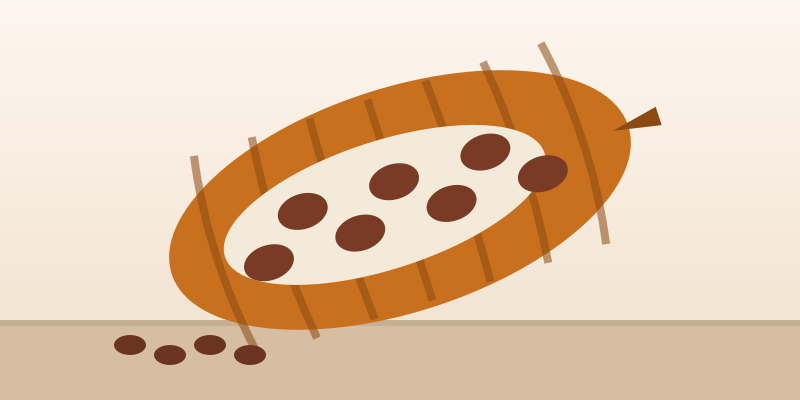
Every chocolate bar starts on a tree. Theobroma cacao is a small tropical tree that grows only in specific conditions, which is why cocoa comes from a fairly narrow band around the equator. Understanding where cacao grows, and how the place and the people who grow it influence its flavor, adds a new dimension to tasting chocolate.
The cacao belt
Cacao generally grows within about 20 degrees north and south of the equator, a region often called the cacao belt. The trees need warmth throughout the year, high humidity, regular rainfall and protection from strong wind and direct sun. In many traditional farms, cacao grows in the shade of taller trees, sometimes alongside fruit trees and other crops.
The tree is native to the Americas, where cacao was used by Mesoamerican cultures for centuries before European contact. Today it is grown in many tropical countries across West Africa, Latin America, the Caribbean and Asia-Pacific.
The main growing regions
West Africa
West Africa produces the majority of the world's cocoa, with Côte d'Ivoire and Ghana as the largest producers. Much of this cocoa goes into mainstream chocolate and is valued for a classic, robust cocoa flavor. The region has also been the focus of significant attention on farmer incomes, child labor and deforestation, issues that many certification schemes and companies say they are working to address.
Latin America and the Caribbean
Countries such as Ecuador, Peru, Brazil, the Dominican Republic and others grow cacao ranging from bulk cocoa to rare, fine-flavor varieties. Ecuador is known for the aromatic "Nacional" type, and Latin American origins are popular with craft chocolate makers.
Asia and the Pacific
Indonesia is a major producer, and countries such as Papua New Guinea, Vietnam and the Philippines also grow cacao, some with distinctive flavors that attract specialty makers.
Cacao varieties
Cacao is traditionally grouped into three broad types, although modern genetic research shows far more diversity:
- Forastero: hardy and productive, the basis of most of the world's cocoa supply.
- Criollo: rarer and more delicate, often associated with fine, mild flavors.
- Trinitario: a hybrid of the two, combining some hardiness with complex flavor.
What "terroir" means for chocolate
Like wine and coffee, chocolate can reflect where it was grown. Soil, climate, altitude, neighboring plants and the genetics of the trees all play a part. Chocolate from different origins can show notes described as fruity, floral, nutty, earthy or spicy. Single-origin bars, made from cacao from one country, region or estate, are designed to showcase these differences.
Post-harvest processing matters as much as place
Much of chocolate's flavor is created after harvest. Farmers open the pods, remove the beans and their pulp, and ferment them, usually for several days in heaps or boxes. Fermentation develops flavor precursors and reduces bitterness. The beans are then dried, often in the sun. Poor fermentation or drying can produce flat or off flavors, regardless of origin. Later, chocolate makers roast, grind and conch the beans, each step shaping the final taste. Our article on the science of chocolate explains these stages.
How to explore origins
- Choose two or three single-origin dark bars with a similar cacao percentage, so you compare origin rather than sweetness. Our guide to chocolate percentages explains why.
- Taste them side by side, using the method in how to taste chocolate.
- Read the packaging for origin, variety and the maker's tasting notes, then see what you notice yourself.
A note on sourcing
Labels such as fair trade, organic and direct trade aim to address different concerns, from farmer pay to farming practices. Their standards differ, so it is worth reading what each label actually covers.
Chalkolat is an independent, educational site about chocolate. It does not sell chocolate or offer tastings. Information is general and not health or legal advice.
Updated October 17, 2026.